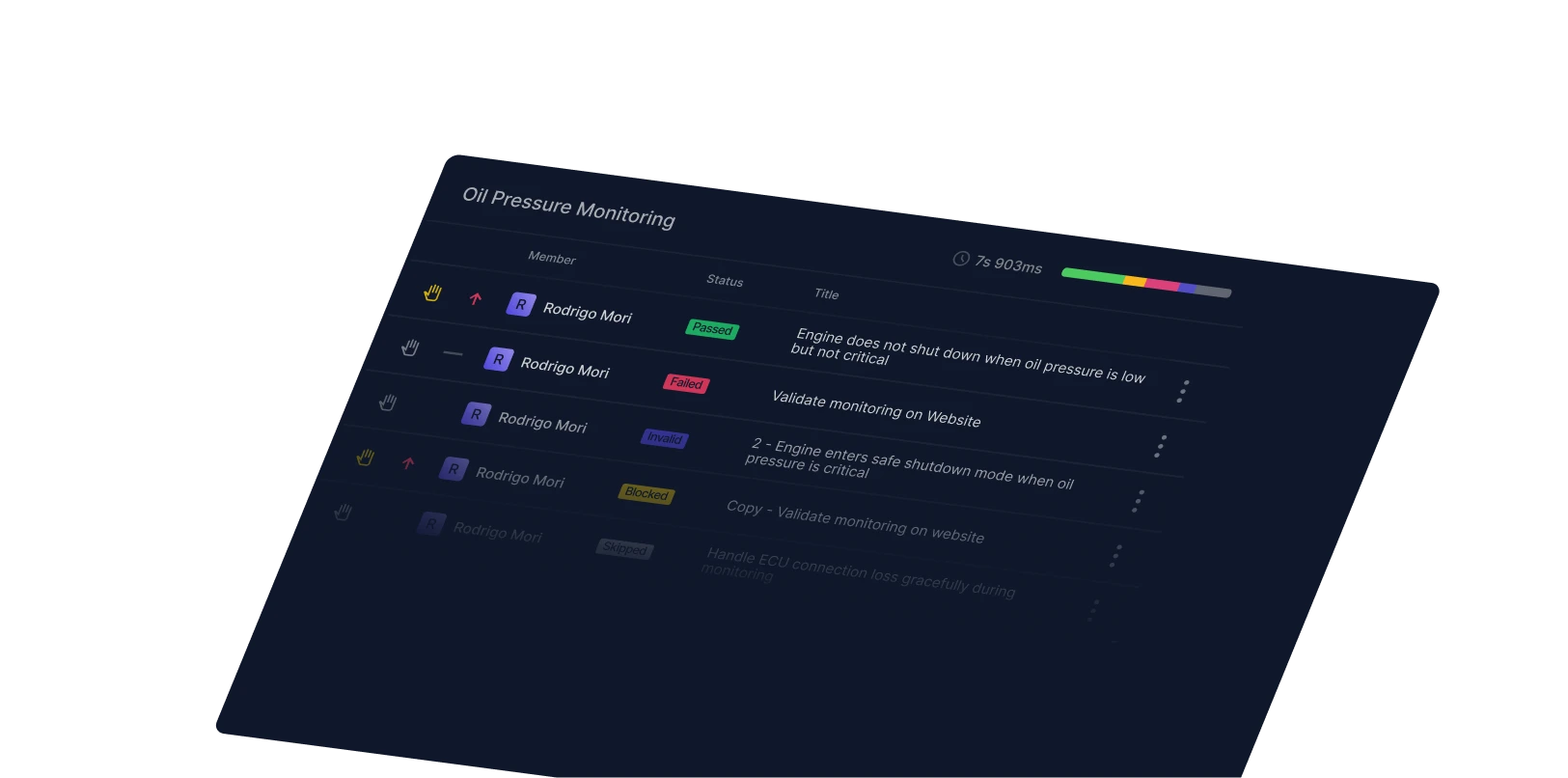
Test debt compounds
The backlog never shrinks. Manual cases pile up faster than anyone converts them. Every sprint, the gap between what you have and what you need gets wider.
In financial services engineering, that gap has consequences. When something breaks in production, the question isn't just what happened. It's what was tested, when, and by whom. Qase gives your team a documented answer before every release.



Trusted by engineering teams at leading financial services companies







Each one compounds the others, and in financial services, none of them stay small for long
The backlog never shrinks. Manual cases pile up faster than anyone converts them. Every sprint, the gap between what you have and what you need gets wider.
CI pipelines, spreadsheets, issue trackers. Each holds a fragment. No single view of what passed, what failed, what's at risk before a release.
Requirements and test results live in separate systems. When something breaks in production, no one can reconstruct what was tested.
"Are we good to ship?" gets a different answer from everyone in the room. In financial services, that answer needs to be more than a feeling.
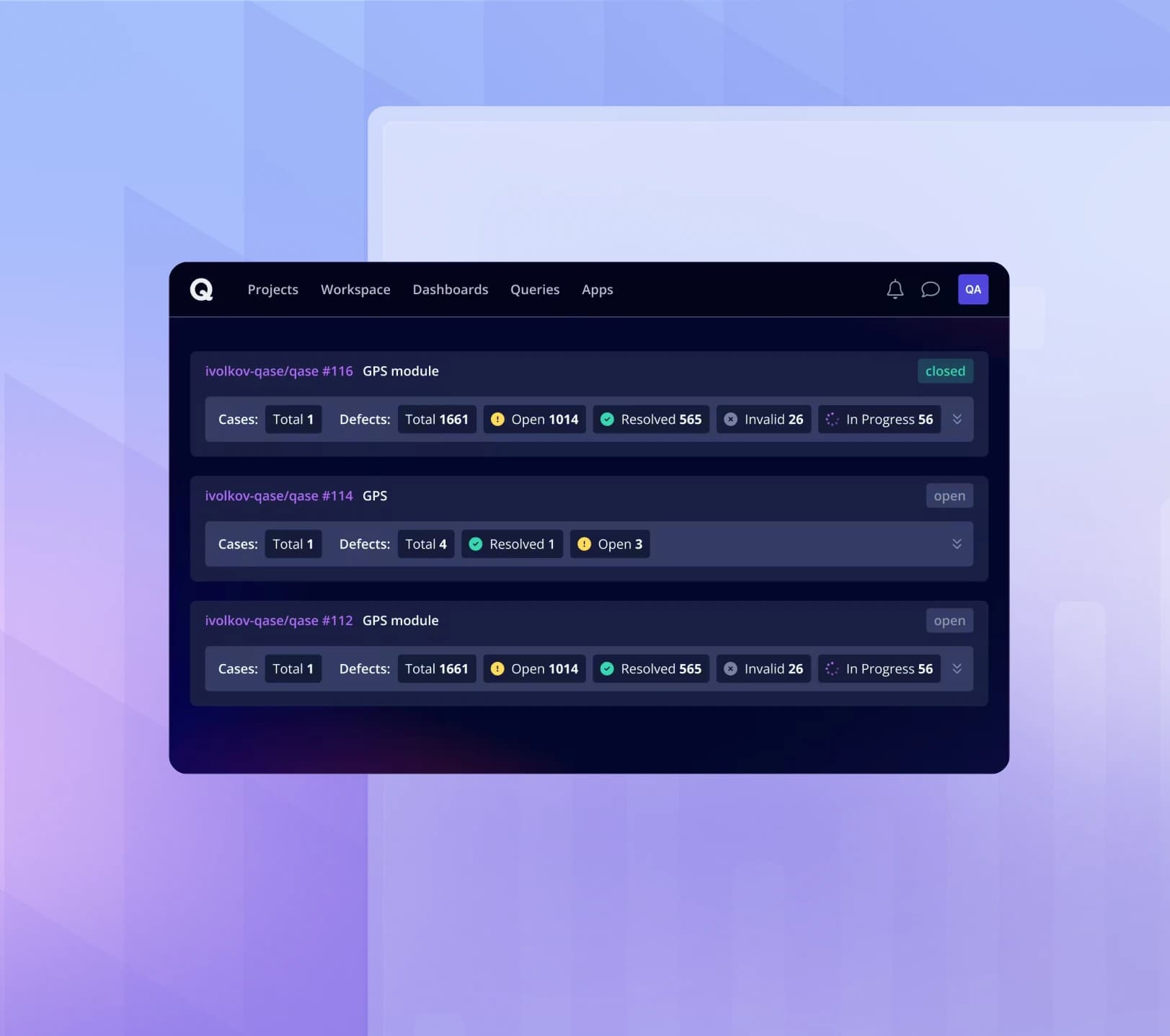
The Requirement Traceability Report shows which requirements have test coverage, which are unlinked, and the current test status for each linked requirement. When something fails in production, the trace from requirement to test to outcome exists. It does not need to be reconstructed after the fact.
You can't address gaps you can't see. Qase makes them visible.
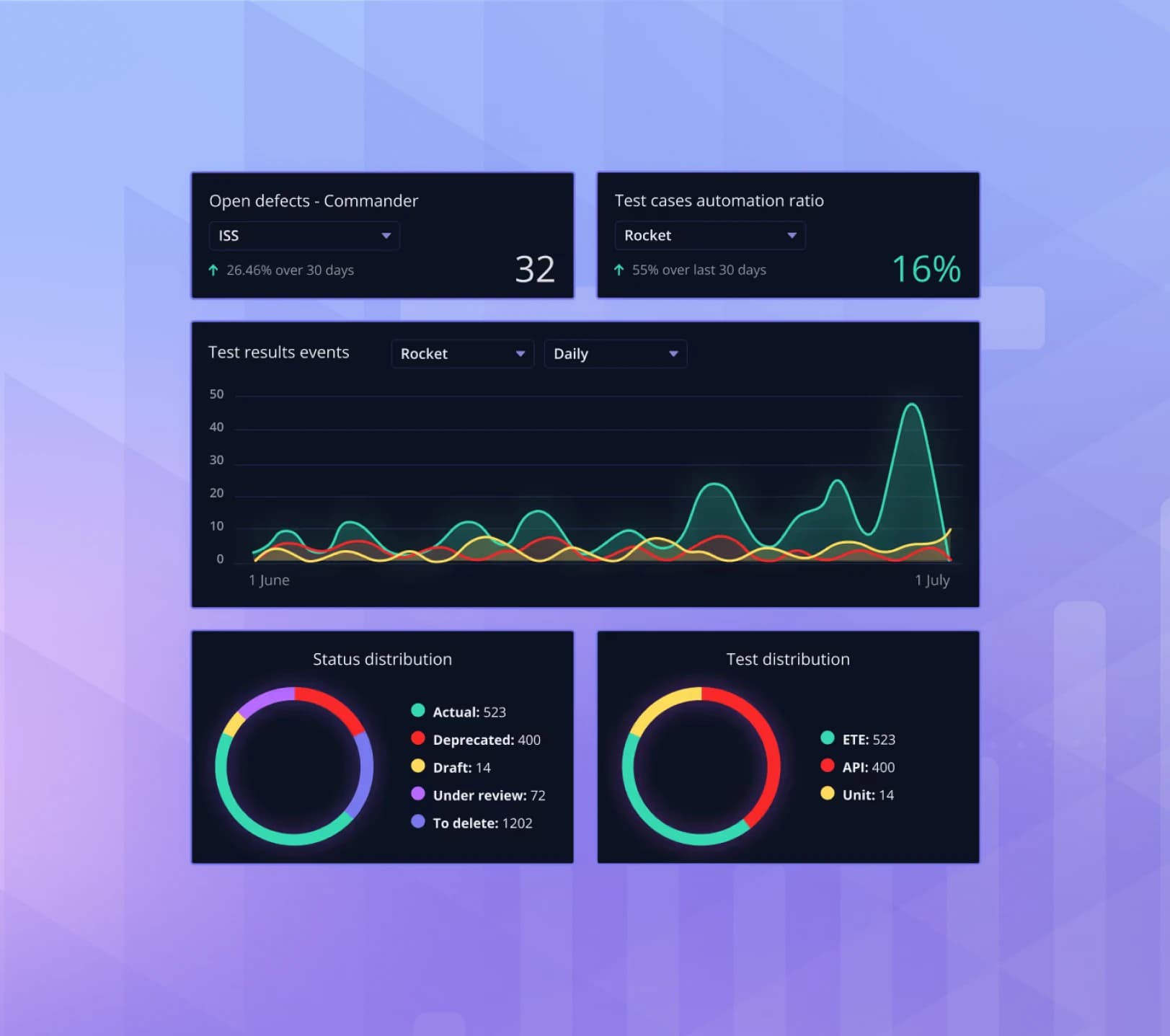
Pass rates, coverage gaps, and open blockers surface in a shared dashboard. Release decisions come from data. PMs, engineers, and QA leads see the same picture.
The question "are we good to ship?" has a documented answer, not an informal one.
Map risks to test cases. See which areas of the system have coverage and which don't. Risk-based decisions are documented in Qase. The rationale for what was tested and what wasn't survives the sprint. And survives any review.
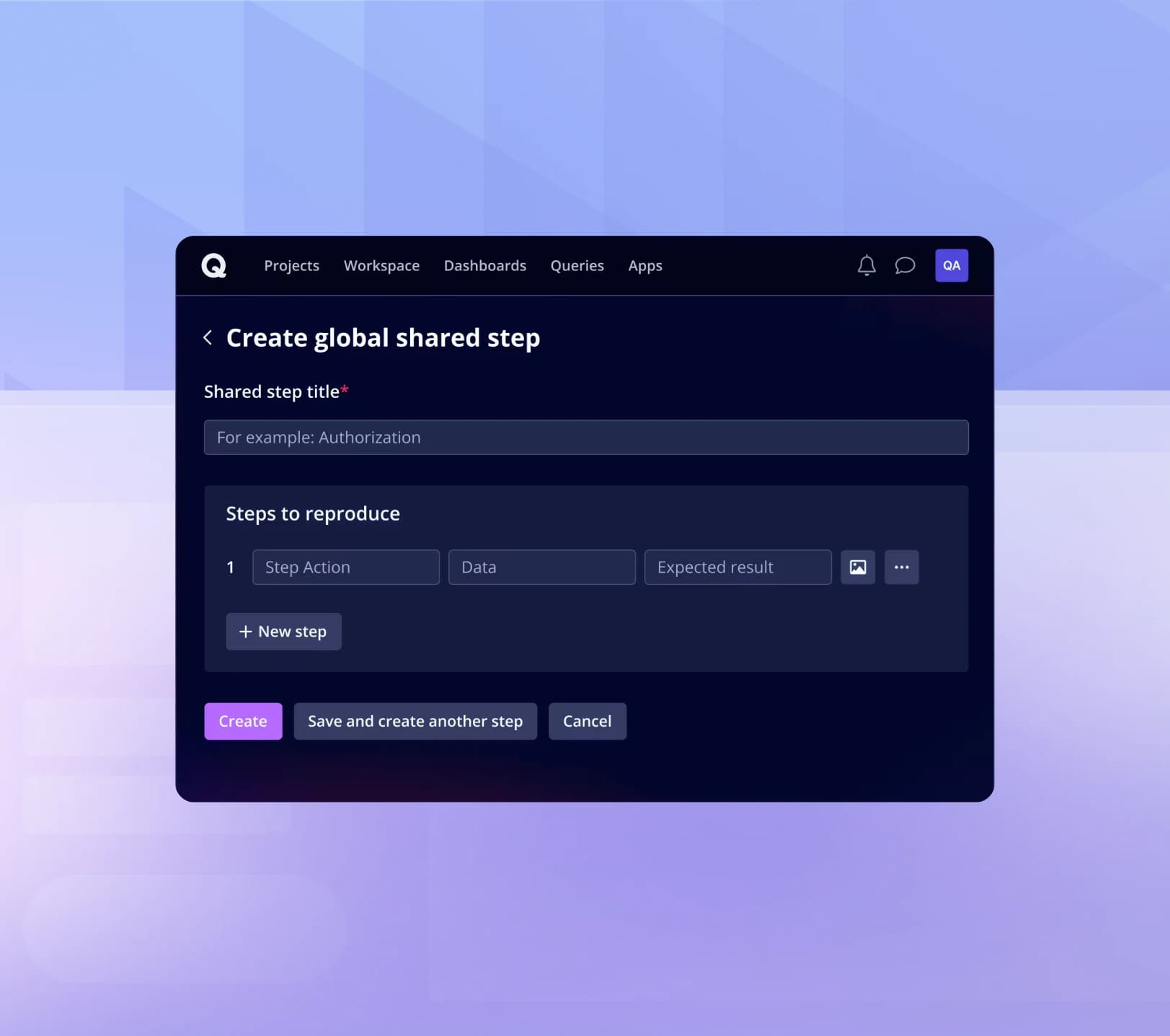
Each test run is timestamped, assigned to a specific tester, and tied to a test plan and milestone. Defects are linked to the test cases that caught them. The full history is searchable.
There is no gap between "we ran those tests" and "here's the evidence."
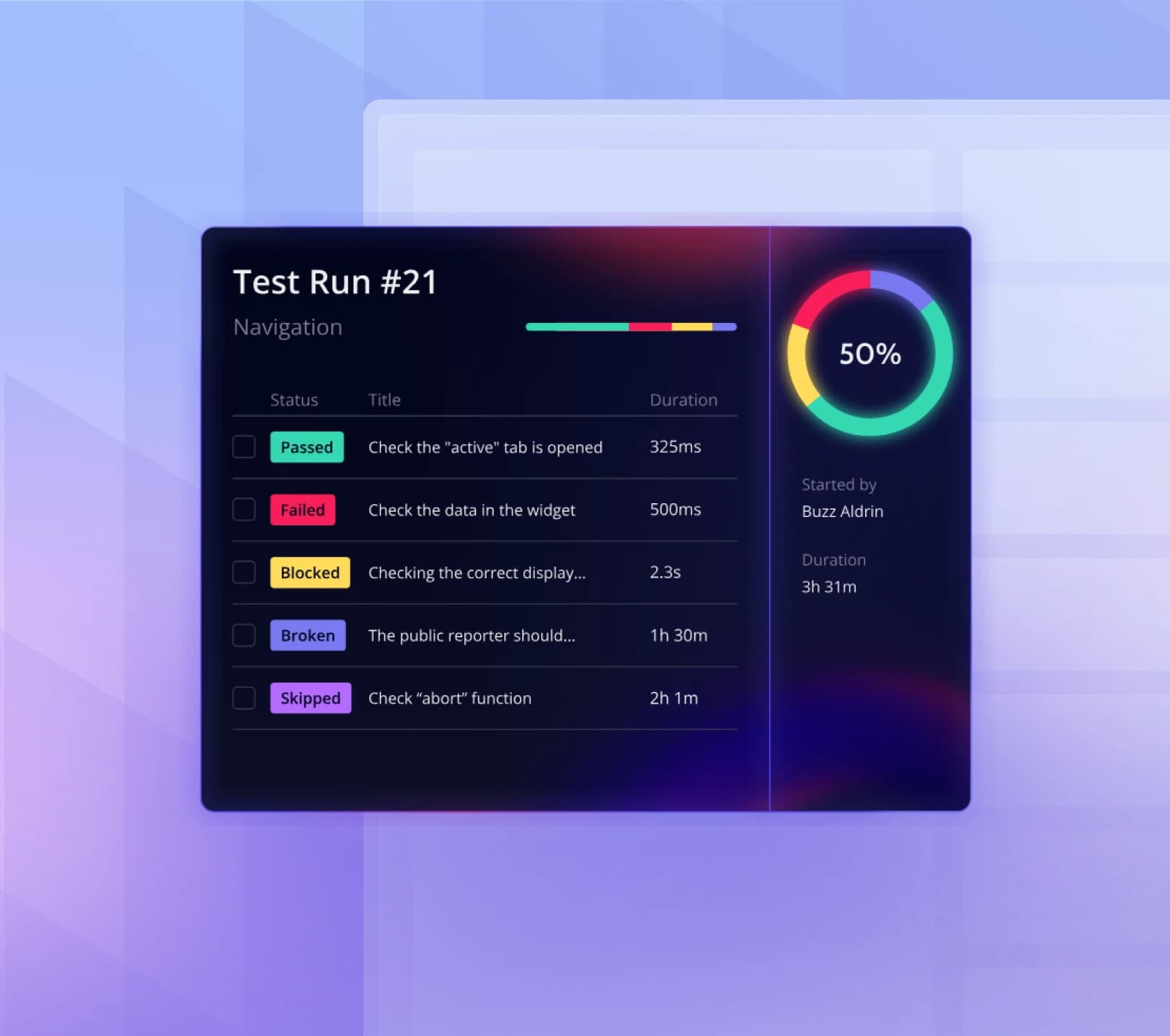
Qase connects with Jira, GitHub, and Azure DevOps. When a test case fails, the defect is filed in the issue tracker your team already uses. The connection between failure and fix is traceable in both directions.

Built for teams where every test run needs to leave a trace
Requirements, test cases, results, and release sign-off. Traceable end-to-end. Not reconstructed from memory after the fact.
Test cases, results, requirements, and defects in one place. Not four tools sending webhooks to each other and hoping the data stays consistent.
ISO/IEC 27001, SOC 2 Type II, GDPR. Data residency options for regulated environments. Your test data is held to the same standard as the software it validates.
Jira, GitHub, Azure DevOps, Jenkins, and more. Connects to the tools your engineering organization already uses. Adding Qase does not replace your stack. It makes it visible.
The quality of your testing strategy depends on how well you understand the risks you're testing against. This series covers the full risk-based testing process, from identification to portfolio review.